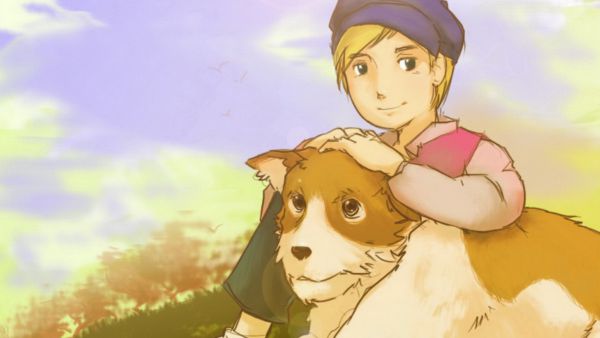
I really loved this book. It has some of my favourite elements in it, and it gave me a satisfactory ending for the story. It also has a puppy. I like puppies.
The book is called A Dog of Flanders, which is, shockingly, set in the Belgian village of Antwerp. It was written in 1872 by the British writer Marie Louise de la Ramée, under the pseudonym "Ouida". It revolves around a Flemish boy named Nello and his dog Patrasche.
The story starts with Patrasche's old owner overworking Patrasche and leaving Patrasche at the side of the road to die of hunger. Nello and his grandfather come across Patrasche and decide to rescue the poor dog. Under Nello's care, Patrasche starts to recover from his injuries and eventually becomes Nello's best friend.
Due to Nello and his grandfather being extremely poor, Nello is illiterate, but his love and passion lies in drawings and art. his only wish is to be able to see the baroque artist Rubens' great painting. His grandfather becomes increasingly sick, and is unable to leave his bed, so Nello helps his grandfather to sell milk in order to earn money to pay rent and buy food.
Meanwhile, Nello falls in love with a girl called Aloise, whose father is a rich man in the village. Her father disapproves of their relationship and forbids Nello from seeing Aloise any more. Nello is hurt, but becomes hopeful when he enters a drawing competition, thinking that he will be able to help his sick grandfather and earn the respect of Aloise's father, Nicholas.
Nello walks back home after selling milk and Patrasche finds a doll on the snowy ground. Thinking that Aloise would like the doll, Nello heads to her house and gives it to her. When it is time to reveal the winner of the drawing competition, Nello eagerly awaits the results. Heartbroken, he realises he is not the winner and goes back home.
On the way back, he notices that a building on Aloise's family's property is on fire. He tries to put out the fire, but Nicholas screams at him and accuses him of lighting the fire. This causes many people to start whispering gossip about him. Patrasche gets irritated by this and tries to bite Aloise's father because Patrasche knows that his master is innocent.
Because of Nicholas' power and status in the village, he convinces everyone not to buy any more milk from Nello. Nello's grandfather dies from his illness, and Nello uses all of the family's money just to give his beloved grandfather a decent burial.
After a few weeks, Nello and Patrasche are kicked out of their house due to not having money to pay rent. They wander around in the cold winter until Nello stumbles upon a wallet with the name "Cogez", Aloise's family name. He immediately rushes to her house and gives her the wallet, and asks her to take care of Patrasche in return. He then leaves without saying any more.
Nicholas comes home and is relieved to see his wallet, because it has all of his money inside. He feels guilty for treating Nello so badly. He decides to fulfill Nello's wish by feeding Patrasche but realises that Patrasche is not there.
Patrasche finds Nello inside a cathedral, the one he had been visiting every day. The cathedral is home to a famous painting by Rubens that he wanted to see, but could not because it required money. Nello is starving and freezing, and is struggling between life and death. At that moment, a strong gust of wind blew away the cloth that had been concealing the painting, and Nello loses consciousness after admiring the painting he had so desperately wanted to see.
The next day, people of the village gather in the cathedral, horrified to see Nello on the floor, with his faithful pet dog in his arms, both of them frozen to death. At that moment, a man bursts into the cathedral, announcing that Nello was the true winner of the competition, and that his drawing had arrived so late that he was not included in the results. The man says that Nello is gifted, and had planned to take Nello as an apprentice. The book ends with with church bells ringing, and the whole village mourning for Nello and his dog.
I guess I should have warned you about that ending. Did I mention that sad endings are my favourite?
You might be biased towards the typical happy storybook ending, and think that this ending is too depressing, but when you think again, you will realise that Nello really did have a happy ending after all. He may have died, but he got everything he wanted. He got to be with Patrasche until the very end, he got to see Aloise's one more time, he earned the respect of Nicholas Cogez, and he finally got to see the great painting by Rubens.
The story is beautifully written nonetheless, and I hope the ending will not stop you from reading the book.
Woof, woof.
- Chan Yi Ying, Year 7 student and self-proclaimed fairytaler.
On the way back, he notices that a building on Aloise's family's property is on fire. He tries to put out the fire, but Nicholas screams at him and accuses him of lighting the fire. This causes many people to start whispering gossip about him. Patrasche gets irritated by this and tries to bite Aloise's father because Patrasche knows that his master is innocent.
Because of Nicholas' power and status in the village, he convinces everyone not to buy any more milk from Nello. Nello's grandfather dies from his illness, and Nello uses all of the family's money just to give his beloved grandfather a decent burial.
After a few weeks, Nello and Patrasche are kicked out of their house due to not having money to pay rent. They wander around in the cold winter until Nello stumbles upon a wallet with the name "Cogez", Aloise's family name. He immediately rushes to her house and gives her the wallet, and asks her to take care of Patrasche in return. He then leaves without saying any more.
Nicholas comes home and is relieved to see his wallet, because it has all of his money inside. He feels guilty for treating Nello so badly. He decides to fulfill Nello's wish by feeding Patrasche but realises that Patrasche is not there.
Patrasche finds Nello inside a cathedral, the one he had been visiting every day. The cathedral is home to a famous painting by Rubens that he wanted to see, but could not because it required money. Nello is starving and freezing, and is struggling between life and death. At that moment, a strong gust of wind blew away the cloth that had been concealing the painting, and Nello loses consciousness after admiring the painting he had so desperately wanted to see.
The next day, people of the village gather in the cathedral, horrified to see Nello on the floor, with his faithful pet dog in his arms, both of them frozen to death. At that moment, a man bursts into the cathedral, announcing that Nello was the true winner of the competition, and that his drawing had arrived so late that he was not included in the results. The man says that Nello is gifted, and had planned to take Nello as an apprentice. The book ends with with church bells ringing, and the whole village mourning for Nello and his dog.
I guess I should have warned you about that ending. Did I mention that sad endings are my favourite?
You might be biased towards the typical happy storybook ending, and think that this ending is too depressing, but when you think again, you will realise that Nello really did have a happy ending after all. He may have died, but he got everything he wanted. He got to be with Patrasche until the very end, he got to see Aloise's one more time, he earned the respect of Nicholas Cogez, and he finally got to see the great painting by Rubens.
The story is beautifully written nonetheless, and I hope the ending will not stop you from reading the book.
Woof, woof.
- Chan Yi Ying, Year 7 student and self-proclaimed fairytaler.

No comments:
Post a Comment